Have you ever received a text saying, “What’s your ETA?” and wondered what it means? You’re not alone.
Text messaging has introduced countless abbreviations that make communication faster and easier. Among the most commonly used acronyms is ETA.
Understanding the ETA meaning in text can help you communicate more effectively in personal conversations, workplace chats, delivery updates, and social media messages.
Whether you’re coordinating a meetup with friends or checking on a package delivery, ETA is a term you’ll encounter frequently.
In this guide, you’ll learn exactly what ETA means, where it came from, how people use it in texting, examples of ETA in conversations, common alternatives, and mistakes to avoid.
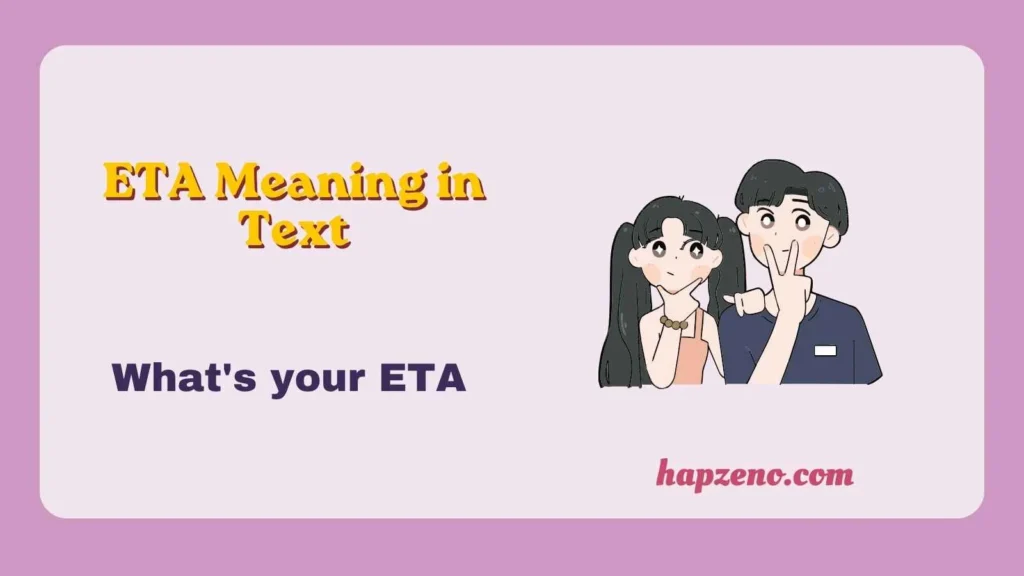
What Does ETA Mean in Text?
ETA stands for Estimated Time of Arrival.
It refers to the expected time someone, something, or an event will arrive at a destination. In texting, people use ETA as a quick way to provide timing information without typing a long sentence.
For example:
“My ETA is 15 minutes.”
This means the sender expects to arrive in approximately 15 minutes.
Because it is short and easy to understand, ETA has become a standard abbreviation in everyday communication.
Quick Definition of ETA
| Term | Meaning |
|---|---|
| ETA | Estimated Time of Arrival |
| Purpose | Shows expected arrival time |
| Common Use | Texting, travel, deliveries, work |
| Tone | Casual and professional |
Simply put, ETA helps people understand when something is expected to happen.
ETA Meaning in Texting Explained
In texting, ETA is most commonly used when discussing travel, arrivals, meetings, or schedules. Instead of writing a full sentence such as “I think I will arrive in about twenty minutes,” people simply write “ETA 20 minutes.”
This abbreviation saves time and keeps messages concise.
Examples include:
- ETA 10 mins 🚗
- What’s your ETA?
- Driver ETA is 5 minutes.
- Package ETA is tomorrow.
- Flight ETA is 8:30 PM.
Notice that ETA can refer to people, vehicles, deliveries, flights, and even project completion times.
The Origin of ETA
Although ETA is popular in texting today, the abbreviation existed long before smartphones and social media.
It originally came from transportation and logistics industries. Pilots, shipping companies, military personnel, and railway operators needed a simple way to communicate arrival times.
Over time, ETA became widely used in:
- Aviation ✈️
- Shipping 🚢
- Military operations 🎖️
- Rail transportation 🚆
- Delivery services 📦
- Business communication 💼
As digital communication evolved, ETA naturally became part of texting language.
How ETA Is Used in Everyday Text Messages
The flexibility of ETA is one reason for its popularity. It works in both casual and professional conversations.
1. Meeting Friends
Friends often use ETA when coordinating plans.
Example:
Friend: “We’re already here.”
You: “Running late. ETA 10 minutes.”
2. Family Updates
Family members use ETA to stay informed about arrivals.
Example:
Mom: “When will you get home?”
You: “ETA around 7 PM.”
3. Delivery Tracking
Delivery companies frequently provide ETA updates.
Example:
“Your package ETA is tomorrow afternoon.”
4. Ride-Sharing Apps
Services like ride-sharing apps often display ETA information.
Example:
“Driver ETA: 3 minutes.”
5. Workplace Communication
Professionals use ETA when discussing projects or deadlines.
Example:
“What’s the ETA on the monthly report?”
In this context, ETA refers to expected completion rather than physical arrival.
Examples of ETA in Text Conversations
Understanding ETA becomes easier when you see it in real conversations.
1.
Person A: Are you close?
Person B: ETA 15 minutes.
2.
Friend: Did your flight land?
You: Not yet. ETA is 9:20 PM.
3.
Customer: When should I expect delivery?
Support: Current ETA is tomorrow morning.
4.
Boss: When will the presentation be ready?
Employee: ETA Friday afternoon.
5.
Sibling: Dinner is ready.
You: Great! ETA 20 minutes.
Why ETA Is So Popular in Texting
ETA remains one of the most widely recognized abbreviations because it offers several advantages.
- Fast to type
- Easy to understand
- Works in many situations
- Suitable for professional use
- Accepted worldwide
Unlike many internet slang terms that come and go, ETA has remained relevant for decades.
ETA on Social Media
ETA appears frequently on social media platforms and messaging apps. Users often post updates about travel, deliveries, events, or plans.
Examples include:
- “Concert ETA: 30 minutes!” 🎵
- “Road trip ETA is noon.” 🚗
- “Food ETA is 15 mins.” 🍕
- “Vacation flight ETA 7 PM.” 🌴
Social media users appreciate ETA because it quickly communicates timing information to followers and friends.
ETA in Business Communication
Business professionals use ETA regularly in emails, team chats, and project management discussions.
In a workplace setting, ETA may refer to:
- Project completion dates
- Report submissions
- Client deliverables
- Meeting arrivals
- Product shipments
For example:
“The ETA for the software update is next Tuesday.”
Here, ETA refers to the expected completion date rather than someone’s arrival.
ETA vs ETD: What’s the Difference?
Many people confuse ETA with ETD because both involve scheduling.
| Abbreviation | Meaning | Purpose |
|---|---|---|
| ETA | Estimated Time of Arrival | When something arrives |
| ETD | Estimated Time of Departure | When something leaves |
Example:
- Flight ETD: 2:00 PM
- Flight ETA: 5:00 PM
The first tells you when the flight leaves, while the second tells you when it arrives.
Common Alternatives to ETA
Although ETA is widely used, some people prefer alternative phrases.
- Arrival time
- Expected arrival
- Expected delivery time
- Expected completion time
- Projected arrival
- Approximate arrival
- Expected schedule
However, ETA remains the shortest and most convenient option.
Common Mistakes People Make With ETA
Despite its simplicity, people occasionally misuse ETA.
Using ETA Without Context
Simply writing “ETA” without additional information may confuse readers.
Better:
“ETA 10 minutes.”
Confusing ETA With ETD
Remember that ETA means arrival, not departure.
Assuming Everyone Knows the Term
While ETA is common, some people may not be familiar with it. In formal situations, you may choose to write the full phrase.
When Should You Use ETA?
You can use ETA whenever timing information matters.
Examples include:
- Travel plans
- Road trips
- Airport pickups
- Food deliveries
- Package tracking
- Business deadlines
- Meeting arrivals
- Event planning
If someone wants to know when something will arrive or be completed, ETA is often the perfect response.
FAQs:
What does ETA mean in texting?
ETA stands for Estimated Time of Arrival. It refers to the expected time a person, vehicle, package, or event will arrive.
Is ETA formal or informal?
ETA can be both. It is commonly used in casual texts and professional communication.
Can ETA be used for projects?
Yes. In business settings, ETA often refers to an expected completion date or delivery time.
What is the opposite of ETA?
The closest opposite term is ETD (Estimated Time of Departure), which refers to when something leaves.
Why do people ask for an ETA?
People ask for an ETA to understand when someone or something is expected to arrive or be completed.
Final Thoughts:
The ETA meaning in text is simple yet extremely useful. Standing for Estimated Time of Arrival, ETA helps people communicate timing information quickly and efficiently.
Whether you’re meeting friends, tracking a package, coordinating travel, or discussing a work project, ETA provides a clear estimate of when something is expected to arrive.
Because it works in both personal and professional communication, ETA remains one of the most practical abbreviations used today.
Understanding how and when to use it can make your messages clearer and more effective.
If you enjoyed this guide, explore more texting abbreviation articles to expand your knowledge of modern digital communication and internet slang.