Have you ever received a text message that simply said “DW” and wondered what it meant? You’re not alone.
Modern texting is full of abbreviations, acronyms, and internet slang that can sometimes feel confusing.
Among these popular shortcuts, DW is one of the most commonly used expressions in online conversations.
If you’re searching for the answer to DW mean in text, you’ve come to the right place.
This guide explains everything you need to know about the abbreviation, including its meaning, origin, examples, variations, and proper usage.
Whether you’re chatting with friends, texting family members, or browsing social media, understanding DW can help you communicate more naturally and confidently. 😊
What Does DW Mean in Text?
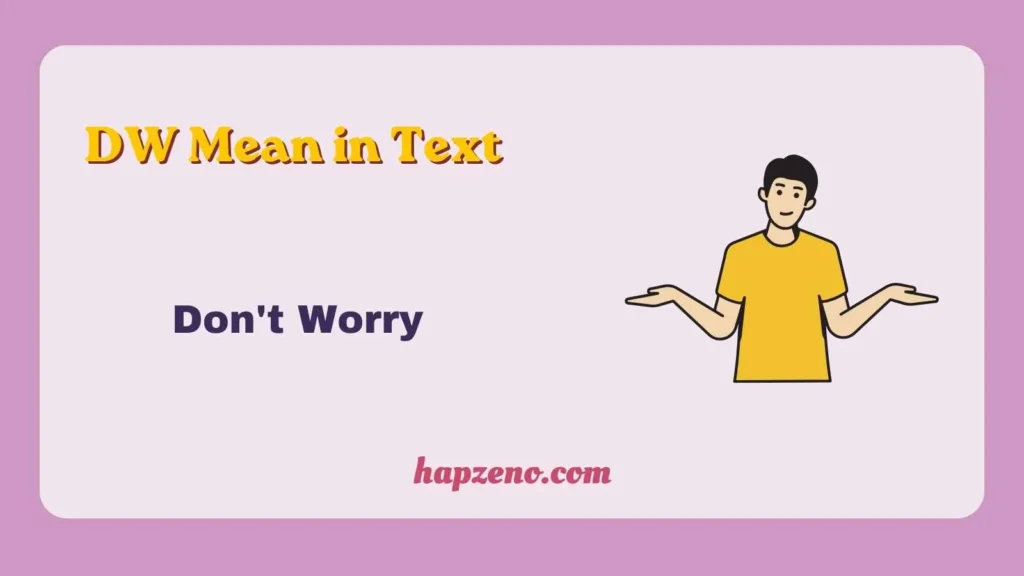
DW stands for “Don’t Worry.”
People use this abbreviation to reassure someone, reduce concerns, or tell another person that a situation is under control. It is commonly used in text messages, online chats, social media conversations, gaming platforms, and messaging apps.
When someone says DW, they are essentially saying:
- Don’t worry about it.
- Everything is okay.
- No problem.
- It’s under control.
- You don’t need to stress.
The abbreviation saves time and makes digital conversations quicker and more casual.
“DW, I’ve already taken care of it.”
In this example, the sender is reassuring the recipient that the issue has already been handled.
DW Meaning at a Glance
| Term | Meaning |
|---|---|
| DW | Don’t Worry |
| Category | Texting Abbreviation |
| Tone | Friendly and Reassuring |
| Common Platforms | Text Messages, WhatsApp, Instagram, Snapchat, Discord |
| Usage | Comforting Someone |
Origin of DW in Texting
The phrase “Don’t Worry” has existed in everyday language for generations. However, the abbreviation DW became popular with the rise of SMS texting in the late 1990s and early 2000s.
At that time, text messages often had character limits. As a result, users developed shorter ways to communicate common phrases. Acronyms like LOL, BRB, IDK, and DW became part of digital culture.
Over time, DW spread across:
- Mobile texting 📱
- Online forums
- Instant messaging services
- Gaming communities 🎮
- Social media platforms 🌐
Today, DW remains one of the most widely recognized texting abbreviations worldwide.
How DW Is Used in Conversations
People use DW in many different situations. The main purpose is always reassurance.
1. Reassuring a Friend
When someone feels concerned or guilty, DW helps ease their worries.
Example:
Friend: “Sorry I’m running late.”
You: “DW, I’m still getting ready.”
2. Solving a Problem
DW can indicate that a problem has already been handled.
Example:
Person A: “Did anyone submit the report?”
Person B: “DW, I submitted it this morning.”
3. Responding to an Apology
When someone apologizes, DW often means there are no hard feelings.
Example:
Friend: “Sorry I forgot your birthday.”
You: “DW, it happens.”
4. Offering Emotional Support
DW is frequently used to comfort someone during stressful situations.
Example:
“DW, everything will work out fine.”
Examples of DW in Text Messages
Here are some realistic examples showing how DW appears in everyday conversations.
1.
Alex: I think I made a mistake on the project.
Jordan: DW, we can fix it together.
2.
Emma: Sorry I couldn’t answer your call.
Liam: DW, I figured you were busy.
3.
Sophia: Did I leave my charger at your place?
Olivia: DW, I’ll bring it tomorrow.
4.
Noah: I’m nervous about the interview.
James: DW, you’re going to do great!
DW on Social Media
Social media users frequently use DW because it is short, friendly, and easy to understand.
You may see comments such as:
- “DW, everyone makes mistakes.”
- “DW, the update is coming soon.”
- “DW, I got your message.”
- “DW, you’re not alone.”
Platforms where DW commonly appears include:
- TikTok
- Snapchat
- X
- Discord
Its supportive tone makes it ideal for casual online interactions.
DW in Gaming Chats
Gaming communities often use abbreviations to communicate quickly during gameplay. DW is one of the most common examples.
Players use it to reassure teammates and reduce tension.
Examples:
- “DW, I’ll revive you.”
- “DW, we still have time.”
- “DW, we can win the next round.”
- “DW, I’ve got extra supplies.”
In fast-paced games, short messages help players stay focused while communicating effectively.
Different Meanings of DW
Although Don’t Worry is by far the most common meaning, DW can occasionally represent other phrases depending on context.
| DW Meaning | Context |
|---|---|
| Don’t Worry | Texting and social media |
| Dear Wife | Family and relationship discussions |
| Doctor Who | Entertainment and television |
| Data Warehouse | Technology and business |
However, if you see DW in a text message between friends, it almost always means Don’t Worry.
When Should You Use DW?
DW works best in informal conversations.
You can use it when:
- Comforting someone
- Reducing anxiety
- Responding to an apology
- Helping a friend relax
- Explaining that a task is complete
Examples include:
- “DW, I’ll handle it.”
- “DW, it’s not a big deal.”
- “DW, everything is okay.”
- “DW, I understand.”
The abbreviation creates a friendly and reassuring tone that many people appreciate.
When Not to Use DW
Although DW is useful in casual communication, it may not be appropriate in every situation.
Avoid using it in:
- Formal business emails
- Professional reports
- Academic assignments
- Official documents
- Legal communications
Instead of writing DW in professional settings, use complete phrases such as:
- Don’t worry.
- Please don’t be concerned.
- The matter has been resolved.
- Everything is under control.
This approach maintains professionalism and clarity.
DW vs Similar Texting Abbreviations
Several texting abbreviations have meanings related to reassurance or support. Here’s how DW compares.
| Abbreviation | Meaning | Purpose |
|---|---|---|
| DW | Don’t Worry | Reassurance |
| NP | No Problem | Acceptance |
| NVM | Never Mind | Dismiss a topic |
| IDK | I Don’t Know | Express uncertainty |
| TY | Thank You | Show appreciation |
While these abbreviations serve different purposes, DW specifically focuses on reducing worry or concern.
Why Is DW So Popular?
Several factors contribute to the popularity of DW.
- Easy to type ⌨️
- Universally understood 🌍
- Creates positive interactions 😊
- Saves time in conversations ⏱️
- Works across multiple platforms 📱
People naturally appreciate reassurance. Since DW delivers comfort in only two letters, it remains a favorite abbreviation among texters of all ages.
Common DW Phrases You Might See
Here are some popular expressions that include DW:
- DW about it.
- DW, I got this.
- DW, you’re fine.
- DW, no problem.
- DW, I understand.
- DW, it happens.
- DW, I’ll help.
- DW, everything is okay.
These phrases appear regularly in text messages, group chats, and social media comments.
FAQs:
What does DW mean in texting?
DW means Don’t Worry. It is used to reassure someone or reduce concern during a conversation.
Is DW considered slang?
DW is an internet abbreviation rather than traditional slang. However, it is commonly used in casual digital communication.
Can DW be used on social media?
Yes. DW is widely used on Instagram, TikTok, Snapchat, Facebook, WhatsApp, and other social platforms.
Is DW rude?
No. DW is generally friendly, supportive, and reassuring. The tone is usually positive.
What is the opposite of DW?
There is no direct opposite abbreviation, but phrases like “Be careful” or “You should be concerned” express the opposite sentiment.
Final Thoughts:
Understanding DW mean in text can make modern conversations much easier to follow.
In most situations, DW stands for Don’t Worry, a simple yet powerful expression used to reassure others and create a positive atmosphere.
Whether you’re texting friends, chatting on social media, or communicating during online games, DW helps convey support, confidence, and understanding.
Because it is short, friendly, and universally recognized, DW continues to be one of the most popular abbreviations in digital communication.
The next time someone sends you “DW,” you’ll know exactly what they mean—and you can confidently use it yourself.